This is a list for discussion of learning materials, and will include posts of commercial press releases, product announcements, and other news about resources of interest to homeschooling families. Sponsored by Home Education Magazine.
A list of items you should consider when evaluating a curriculum.
You've made the decision to homeschool, so what's next? These suggestions can make choosing a curriculum a bit smoother.
As the number of Internet courses increases over the next few years, here are some questions you can ask when considering a Web-based course.
Homeschooling is a journey parents begin every year. Unfortunately, many families who wouldn't even think of traveling without a map begin this homeschooling journey on their own, asking for directions along the way. You should begin by answering "Three Core Educational Questions." Your answers to these questions will help you reach your destination with confidence. They are:
1. What is education?
2. What are the roles of the teacher and the student?
3. What is the role of the curriculum?
Although you want to jump right into your curriculum search, it will benefit you to slow down and take a good look at your expectations and goal in choosing a curriculum for your family.
These steps will help you organize and plan for your curriculum purchases, finding the best resources for your family
As homeschoolers we have a lot of products and services to choose from. There are a lot of really great companies and individuals marketing homeschooling supplies and services. There are also a few "bad apples" in our basket. How can you tell the difference, and how can you know whether the products or services are worth what you are paying for them?
"Can anyone recommend a curriculum for pre-K and kindergarten? This is a frequent question homeschooling bulletin boards and email lists. It's a perfectly reasonable question, but some of the responses can be confusing to new homeschoolers. We all come into homeschooling with some common preconceptions of what the program should be - but many who have been at it for a while or raised homeschool grads are likely to strongly suggest not setting up a structured study program for young children. This is where some misunderstanding can come into play. Saying that a structured study program for a young child is inappropriate is not at all the same as saying that learning is unimportant during the early years. It's simply that many experienced homeschoolers and other educators feel there are certain kinds of activities that are much more important and appropriate in early childhood than studying the 3 R's - and that to establish a structure that emphasizes the 3 R's at that age can actually be detrimental. If a child is asking to learn to read, of course, that's a whole different matter - but it's simply a question of helping that child learn to read, which is very different thing from setting up a curriculum.
Need a homeschool preschool curriculum? Have you thought about homeschooling your child – but aren’t sure you have what it takes to persevere? Homeschooling during the preschool ages is a great way to try everything out and see if it’s going to work for your family. Homeschooling preschool children also has many side benefits. It gives you something constructive to do during those long daytime hours while your husband is at work. And it will help you bond with your children in a way that nothing else will. Watching your preschooler learn and grow is a wonderful experience – and one that you and your child will both enjoy. You can purchase a great homeschool preschool curriculum that is all ready to go, if that’s what you’re interested in doing. Or, you can come up with activities on your own.
This veteran group of home educators from around the blogosphere joins together to spread the word about their favorite curricla to help you make informed decisions for your homeschool. Their methods and philosophies vary, which means you will find curriculum reviews for an amazing spectrum of materials. You'll find reviews of curricula, books, games, and more.
When you are new to homeschooling, choosing the perfect learning system for your family can be a challenge. This article takes a look at some of the different curriculum options, explores how to combine materials from different suppliers, and discusses the advantages and disadvantages of creating your own course of study.
Flexibility is the key for this homeschooling mother. Alternating textbooks with other materials allows one to tailor the school schedule to life's little realities.
Choosing teaching materials can be an overwhelming decision because there are so many excellent products available and each one claims to be superior to all others. Many veteran home schoolers suggest that you stick to a 'prepackaged" traditional curriculum for the first year or so. Others encourage new home schoolers to consider correspondence schools. Here are some suggestions concerning choosing curricula.
Preschool and Kindergarten – what fun ages! Play is learning and learning is play. Perhaps you’re looking for some ideas for your formal Tot School or perhaps you just want to make sure that your little ones will be ready for first grade when it comes along.
 The Magic of Childhood: A 52 Week Christian Homeschool Curriculum for Preschoole...
 Carson Dellosa Grades 1-3 Beginning Traditional Cursive Handwriting Workbook, Wr...
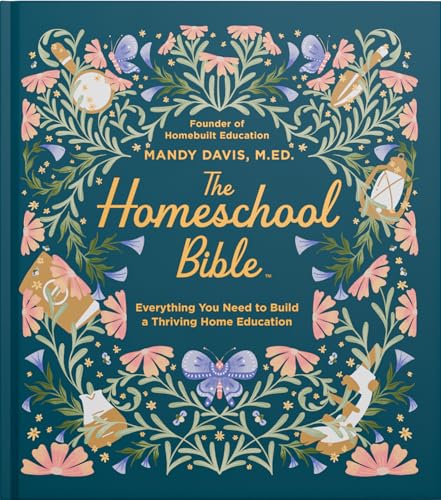
 The Homeschool Bible: A Practical Guide to Homeschool Curriculum, Lesson Plannin...
 Bible Study Workbook for Kids: Lessons, Activities, Quizzes, and Questions to De...
 180 Days™: Homeschool Grade 6 Set: Every Subject, Every Day (180 Days of Practic...
 Human Body Activity Book for Kids: Hands-On Fun for Grades K-3



 102 Top Picks for Homeschool Curriculum: Choosing the Right Curriculum and Appro...
 100 Top Picks for Homeschool Curriculum: Choosing the Right Curriculum and Appro...
 101 Top Picks for Homeschool Curriculum: Choosing the Right Curriculum and Appro...
 The Homeschool Curriculum Guide: Choosing the Right Resources for Every Age, Sub...
 Choosing and Using Curriculum